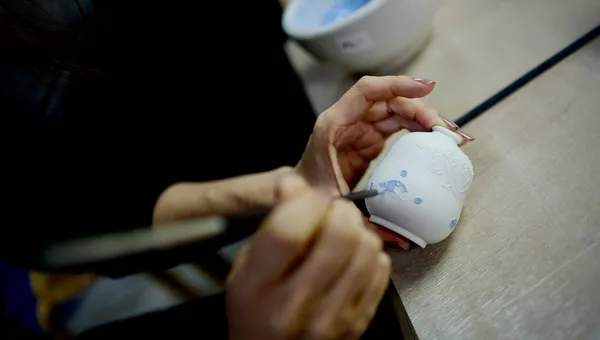

The lasting machine grips the upper, pulls it tight over the last, and drives tacks through the insole in a sequence that takes seconds but has to be right every time. Too much tension and the leather distorts. Too little and the bond fails. The operator watching this process is not reading a textbook. They are reading the shoe, adjusting pressure, checking the result, and deciding whether the sample goes forward or gets pulled. That is the job, in miniature.
So when someone Googles whether they need a degree to get into this kind of work, and the results send them toward vocational college pages or, worse, suggest they are underqualified without a formal qualification, something has gone wrong in how the role is being described.
Where the Assumption Comes From
Manufacturing has spent a generation trying to shed its image as low-skill work. Partly as a result, job postings in industrial production sometimes list qualifications that look more like signals of general ability than genuine requirements. There is also a broader cultural tendency to conflate "technical knowledge" with "formal academic study," as if the only way to understand how footwear machinery works is to sit through a university module on it. Neither assumption holds up well when you look at what the role actually demands.
What the Role Actually Requires
A footwear production machine operator tends specific machines across lasting, cutting, closing, and finishing processes. The essentials list for this profession is almost entirely made up of domain-specific knowledge and hands-on skill, and none of it maps neatly onto a degree curriculum.
The knowledge requirements are deep but highly specific: footwear machinery, footwear materials, footwear components, the footwear creation process, and footwear quality standards. These are things you learn by being in a production environment, not by sitting in a lecture hall. Ergonomics in footwear and leather goods design appears on the essentials list too, which might sound academic until you realise it refers to understanding how a shoe has to fit and function, knowledge that informs every adjustment an operator makes at the machine.
The skill requirements reinforce this picture. Following work procedures is essential, which means reading and applying process documentation accurately, not improvising. Working within textile manufacturing teams is essential, which means coordinating with colleagues across the production line, communicating clearly, and keeping pace with the broader workflow. These are competencies built through practice and experience, not through coursework.
Nothing on the essentials list requires a university degree. No research methods, no academic theory, no formal qualification in engineering or materials science. The knowledge base is technical and specific, but it is the kind of technical knowledge that apprenticeships, on-the-job training, and vocational programmes are genuinely built to deliver.
What People Miss
Three essentials on this list tend to surprise people who hold the "factory work is simple, repetitive labour" assumption, which is a different assumption from the degree one but sits underneath it.
The first is equipment maintenance. Operators are not just users of the machinery; they are responsible for ensuring it stays in working order. Routine maintenance tasks fall within the role, which means understanding how the equipment functions well enough to identify problems early and carry out basic upkeep. That requires a working mechanical literacy that goes beyond pressing buttons.
The second is preparing footwear samples. This is not the work of someone passively feeding material into a machine. Sample preparation involves understanding what a finished product is supposed to look like, making judgements about quality and fit, and producing output that can be evaluated against a standard. It is skilled, attentive work.
The third is following work procedures, which sounds obvious until you consider what it actually means in a production context: reading technical documentation, understanding process sequences, and applying them consistently under production pressure. It is the kind of disciplined, procedural competency that manufacturers genuinely depend on and that takes time to develop properly.
None of these three skills appear in most people's mental image of this job. They also do not appear in any university syllabus, because they are not academic skills. They are occupational ones.
The Verdict
The assumption that you need a university degree to become a footwear production machine operator is, for practical purposes, false. The essentials list contains no credential requirement, no academic knowledge type that would only be taught at degree level, and no skill that a university education is particularly well placed to develop. What the role requires is specific technical knowledge of footwear materials, machinery, and processes, combined with hands-on skills in maintenance, sample preparation, and team-based production work. That profile fits vocational training and direct industry experience far better than it fits a three-year degree.
The degree assumption probably persists because manufacturing has been trying to reposition itself as a knowledge-intensive sector, which it is, but knowledge-intensive does not mean degree-dependent. These are different things, and conflating them pushes people away from roles they are genuinely capable of doing.
For the full breakdown of every essential and supporting skill in this profession, the Proskiro page for footwear production machine operator maps the complete picture.