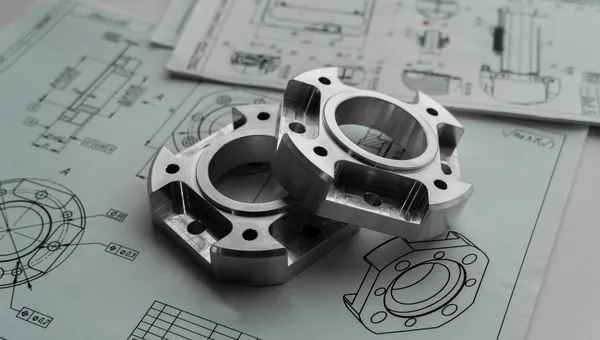

Somewhere in a testing lab, a junior engineer is running a product through its fifth failure cycle of the day. She's not trying to break it out of frustration. She's trying to understand the boundary conditions, the point where functionality degrades, where cost assumptions collapse, where the design stops being replicable at scale. That process, working out how engineering elements interact under real conditions, is what engineering principles looks like in practice. And it turns out that process travels much further than most people who have it realise.
Engineering principles, as a knowledge domain, covers the relationship between functionality, replicability, and cost inside the design and execution of engineering projects. It's not a single technique. It's a framework for asking whether something can be built, built again, and built affordably. That framing is useful in an obvious set of contexts. It's also useful in a much wider one.
The Careers You'd Expect
The clearest home for this skill is in the professions built around designing, testing, and implementing engineered systems. Two roles in the Science and Engineering Professionals category list engineering principles as essential rather than merely supporting.
An electronics engineer works across the full lifecycle of electronic systems, from initial design through to integration and troubleshooting. Engineering principles here are load-bearing: understanding how a circuit design translates into a manufacturable, cost-effective product requires exactly the kind of functionality-versus-replicability thinking the skill describes. You can't design for production without it.
A test engineer operates at the point where engineering assumptions meet physical reality. Test plans, failure analysis, and validation work all require a grounding in what the original design was trying to achieve and what trade-offs were made to get there. Engineering principles give that context. Without it, a test engineer is just running scripts; with it, they're doing diagnostic work.
Sitting one tier down in the technician category, the civil engineering technician applies engineering principles in a more applied, site-facing capacity. The skill is essential here too, because reading and executing engineering plans, flagging deviations, and supporting project delivery all require understanding why the design is the way it is, not just what it says.
The Ones You Wouldn't
Here's where the data gets interesting. Engineering principles appears across 161 professions in total, and the vast majority of those aren't in engineering categories at all.
Consider the aviation sector. An aircraft assembler works with engineering principles because assembly isn't just mechanical repetition; it requires understanding tolerances, load paths, and the logic of how components relate to the system as a whole. An aircraft engine assembler is doing the same thing at higher stakes, where the cost of a misunderstood engineering constraint is not a defective product but a failed engine. The skill shows up as supporting in these roles, but the fact that it's present at all reflects how much assembly work has quietly absorbed engineering literacy.
The military provides another unexpected cluster. An air force officer operates equipment and manages systems where engineering principles inform decision-making about capability, maintenance, and mission planning. The same applies to an artillery officer, where ballistics, equipment reliability, and logistical cost all sit inside an engineering framework. These aren't engineering roles in the traditional sense, but the people doing them well tend to think like engineers about the systems they depend on.
Further still from the obvious: an avionics technician works at the intersection of electronics and aviation systems, which means engineering principles becomes a practical necessity for diagnosing and maintaining integrated systems that were designed with specific functional and cost constraints in mind. The skill doesn't announce itself in the job title, but it's doing real work in the role.
Essential vs Supporting: What the Difference Actually Means
Across the 161 professions where engineering principles appears, only three list it as essential. Those are the electronics engineer, test engineer, and civil engineering technician. In every other profession, the skill is supporting, which means it contributes to performance but isn't formally required.
That distinction matters for how you think about learning and positioning. In the three essential roles, a gap in engineering principles is a genuine barrier to entry. Employers and hiring frameworks expect it. In the 158 supporting roles, it's an advantage rather than a prerequisite. An aircraft assembler who understands engineering principles will be better at the job than one who doesn't, but the role can be performed without that depth.
For someone building a career strategy, this creates two different use cases for the same skill. If you want to move into a core engineering role, engineering principles is foundational and needs to be developed seriously. If you're already working in aviation, defence, manufacturing, or construction, developing it further is a way to differentiate yourself within a role that doesn't formally require it, which is often a more direct path to progression than chasing a credential.
What 161 Professions Actually Tells You
A skill that appears across this many roles, spanning core engineering, aviation assembly, military operations, and construction technician work, is not a niche specialisation. It's a transferable cognitive framework. The professions that use it aren't using it in the same way, but they're all using the same underlying logic: how does a design translate into something functional, repeatable, and economically viable?
If you have this skill and you're wondering where it can take you, the answer is considerably broader than your current sector. If you're considering building it, the return extends well beyond the obvious engineering titles. Explore the full range of professions that use engineering principles at Proskiro.