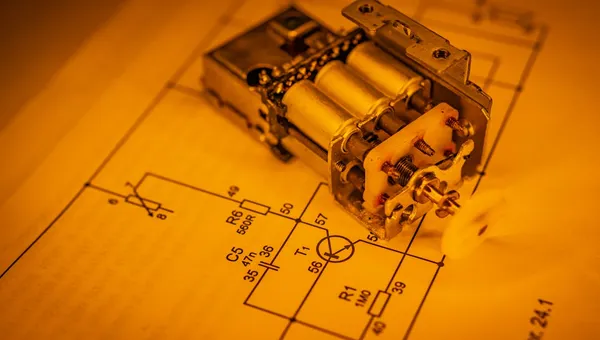

Picture a set of construction drawings spread across a site table, weighted at the corners against the wind. The project manager is not reading them the way an architect might, hunting for aesthetic intent. She's reading for buildability: can this be replicated across twelve identical units without the budget blowing out? Will the drainage detail actually function under load? Does the specified material behave the way the designer assumed it would? That kind of reading is engineering principles in action. It's not a single technique. It's a lens applied to physical problems, one that asks whether something can be built, reproduced, and delivered without the whole thing falling apart.
That lens, it turns out, travels. Across 161 professions in the ESCO framework, engineering principles appears as either essential or supporting knowledge. The spread is not what most people expect.
The careers you'd expect
The obvious home for this skill is professional engineering, and the data confirms it. Among Science and Engineering Professionals, two professions carry engineering principles as part of their core knowledge base.
A fire prevention and protection engineer designs systems that have to work the first time, every time, under the worst possible conditions. The engineering principles lens here is about functionality under stress and the trade-offs between suppression systems, detection arrays, and structural fire resistance. Getting those calculations wrong is not a recoverable error.
A land surveyor works at the intersection of measurement, law, and construction feasibility. The engineering principles component shows up whenever a surveyor has to assess whether a proposed structure or boundary arrangement is physically viable given the terrain, the soil conditions, and the tolerances involved. The maths is precise; the engineering judgement behind it is what makes the output useful.
Both professions require the knowledge formally. Neither is a role where you pick it up on the job and muddle through.
The ones you wouldn't
Here is where the map gets genuinely strange. The third profession in the dataset where engineering principles is classified as essential is not a senior engineer or a technical consultant. It's a marine engineering drafter, sitting within the Science and Engineering Technicians category rather than the professional tier above it.
A marine engineering drafter produces the technical drawings used to build, modify, and repair vessels and their systems. The reason engineering principles is essential rather than merely useful comes down to what the job actually demands: a drafter who doesn't understand functionality and replicability cannot produce drawings that translate cleanly into fabrication. They might produce accurate geometry, but accuracy without engineering judgement produces drawings that confuse the people building from them. The knowledge has to be there before the drawing tool is picked up.
That placement in the technician tier, rather than the professional one, is a useful signal. Engineering principles is not gatekept behind a degree-level credential in every profession that requires it. The marine engineering drafter role is a legitimate route into work that demands the knowledge, without the full professional engineering pathway.
Beyond these three essential cases, engineering principles appears as supporting knowledge across a much wider range of professions. Aircraft assemblers, avionics technicians, and agricultural machinery technicians all carry it as part of their skill profile. So do roles in boilermaking, cable jointing, and building construction. The common thread is physical systems: anywhere something is built, installed, or maintained according to a design that had to account for function and feasibility, engineering principles provides useful background.
Essential vs supporting: what the distinction actually means
When ESCO classifies a skill as essential for a profession, it means the work cannot be performed competently without it. When it's classified as supporting, the skill adds value and broadens capability, but a practitioner can function without it. The difference matters for anyone deciding what to learn and how deeply.
For the three professions above, fire prevention and protection engineering, land surveying, and marine engineering drafting, engineering principles is load-bearing. Employers hiring for those roles will expect the knowledge to be present, not developed on the job.
For the broader 158 professions where it appears as supporting knowledge, the picture is different. An aircraft maintenance technician benefits from understanding engineering principles because it sharpens diagnostic reasoning and makes technical documentation more legible. But the immediate job can be performed by someone who knows the specific systems and procedures without holding the broader conceptual framework. The knowledge makes someone better; it doesn't make them eligible.
That distinction shapes how you should approach learning it. If you're targeting one of the essential roles, treat it as a hard requirement and resource accordingly. Proskiro does have matched learning resources for this skill, so the pathway is mapped. If you're in a supporting-skill profession, the return on learning it is about depth and upward mobility rather than entry eligibility.
What this breadth means in practice
A skill that appears in 161 professions is not a niche specialism. It's a conceptual framework that transfers across sectors because the underlying problems, can this be built, can it be reproduced, does the feasibility hold, appear everywhere physical systems are designed or maintained. Someone who holds this knowledge in an aviation context carries something that is recognisable and applicable in marine, construction, agricultural machinery, and infrastructure roles.
If you're mapping your next career move and engineering principles is already in your toolkit, the Proskiro profession explorer at https://proskiro.com/explore will show you the full range of roles where it appears, along with the other skills each profession requires, so you can see where your existing profile overlaps most cleanly.